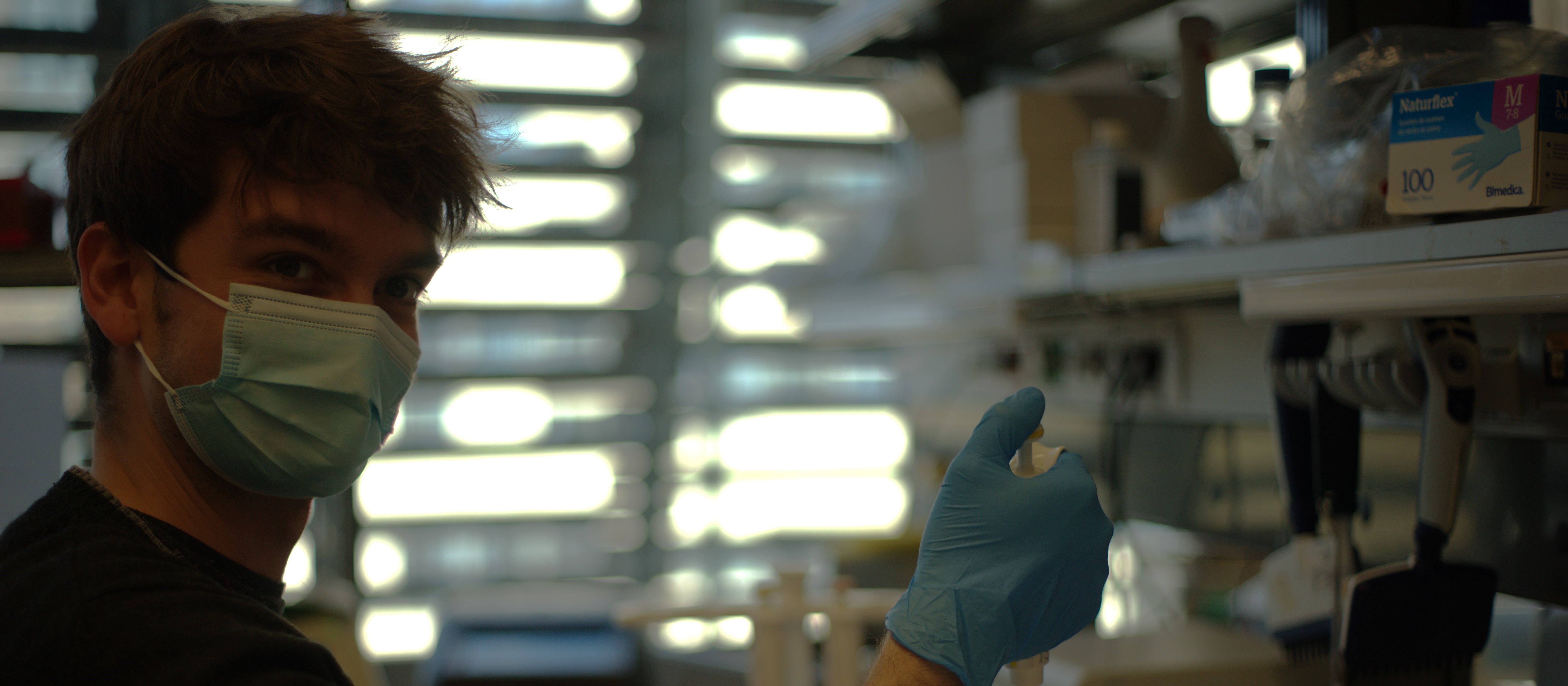
Matthias Blanc
‘Today’s science fiction is tomorrow’s science fact’
Isaac Asimov
matthias.blanc@upf.edu




About me

With a master’s degree in molecular and cellular biology from Sorbonne University in Paris, I went on to earn a PhD in biomedicine from the University Pompeu Fabra in Barcelona.
I joined Dr. Pujades’ lab for my PhD, where I specialized in neurodevelopmental biology and explored the dynamic aspects of neurogenesis. My work in the lab allowed me to develop strong skills in genetics, microscopy and computational biology.
I am deeply convinced that quantitative approaches are vital for advancing our understanding of biology. I am also a strong advocate of collaborative efforts and open science, believing that these are crucial to the global scientific efforts.

Interests
During my Master’s internships, I focused on endodermal and mesodermal differentiation, which laid the experimental and intellectual foundation for my later research. With my PhD work in Pujades lab I matured and refined my understanding of differentiation and its multifaceted aspects by delving in depth into the field of neurogenesis. Through in-vivo observation we can uncover unknown players necessary for differentiation of specific cell types. Being spatial or temporal cues, discovery of those elements would be up to a guessing game if we were to seek them in-vitro. Once specific cues are identified it is of crucial importance to establish how necessary and sufficient they are to the generation of specific cell types. For this, in-vitro approach provides a controllable environment and the prospect of differentiated cells being used for clinical application. Finally, once individual elements can be generated independently the remaining challenges is to understand how those diverse cells can assemble and form coherent structures. In order to explore those scientific field development of innovative tools is essential. The advanced tools we develop allow us to delve into biological processes with unparalleled clarity, manipulate genetic material with precision, and analyze vast datasets. Tool development not only enhance our capacity to make discoveries it can open new fields of research by changing our ways to interact and observe biology.
Scientific

Cell Differentiation
Understanding of how cell diversity is generated is essential. Our ability to leverage biological mechanisms relies heavily on our understanding of cell identities and the way they are generated throughout development. In-vivo studies are necessary to uncover unknown mechanisms that drive the generation of specialized cell types.
Cell Reprogramming
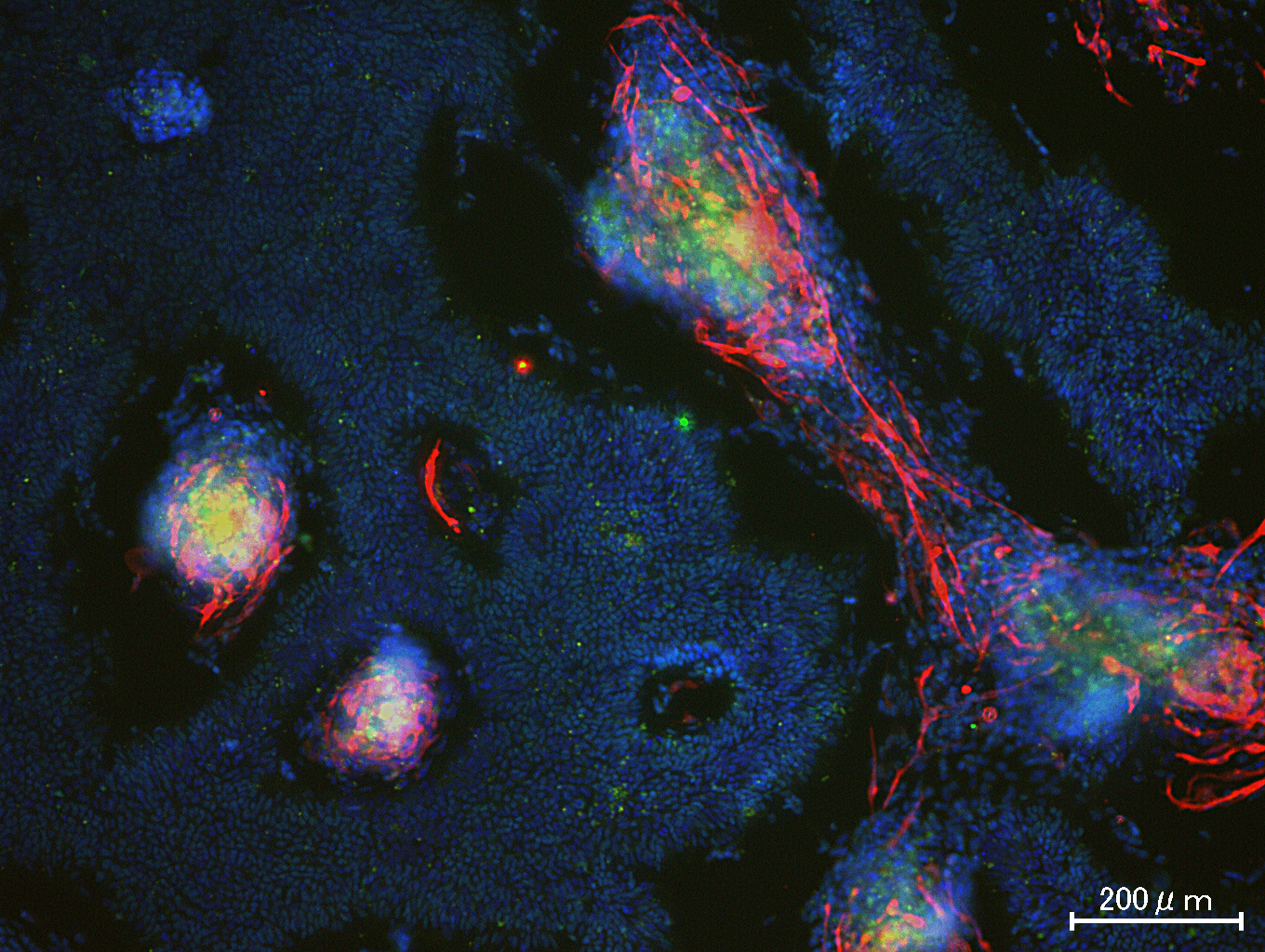
By reproducing specific cell types in-vitro we can confirm the established knowledge of differentiation and put it to good use. Through a refined control of in-vitro differentiation and cell reprogramming, I believe that we can bring forward a new era of biotechnology and cell therapy.

Tissue Morphogenesis
Morphogenesis remains one of the most elusive fields of biology, the way by which multicellular organisms develop complex structures out of individual components. This process requires an advanced understanding of both proliferation and differentiation mechanisms. Understanding of morphogenetic mechanisms will prove invaluable for future research aiming to create synthetic organs.
Tool Development

Genetic Engineering
With advances in our ability to sequence, synthetize and modify DNA the perspective of being able to encode complex series of events is now a reality. Through the combinations of inducible promoters, recombination proteins and Cas9 mediated targeting we are getting closer and closer to reliably program biological events.

Transgenesis
The generation of transgenic lines is an essential aspect of research. It is partially thanks to transgenics that we are able to act on living organisms and observe biological events. The generation of complex transgenic lines can now allow us to follow multiple cellular features simultaneously.

Image Analysis
As the data we acquire becomes increasingly complex drawing relevant insight from it is now more than ever the challenge. Not only can image analysis bring forward previously unattainable information, but it can also improve the efficiency of research by enabling to combine information from multiple experiments.
Personal

Engineering
My dream as a kid was to be an inventor. In my free time I often like to build things, sometimes to make my life easier in the lab sometimes just out of curiosity. I like to tinker with electronics and made a couple things over the years, a portable speaker from the scrap of a guitar amplifier, a smart alarm clock that can be used to turn on utilities, monitors from scrapped broken laptops, a magnification scope etc…

3D Design
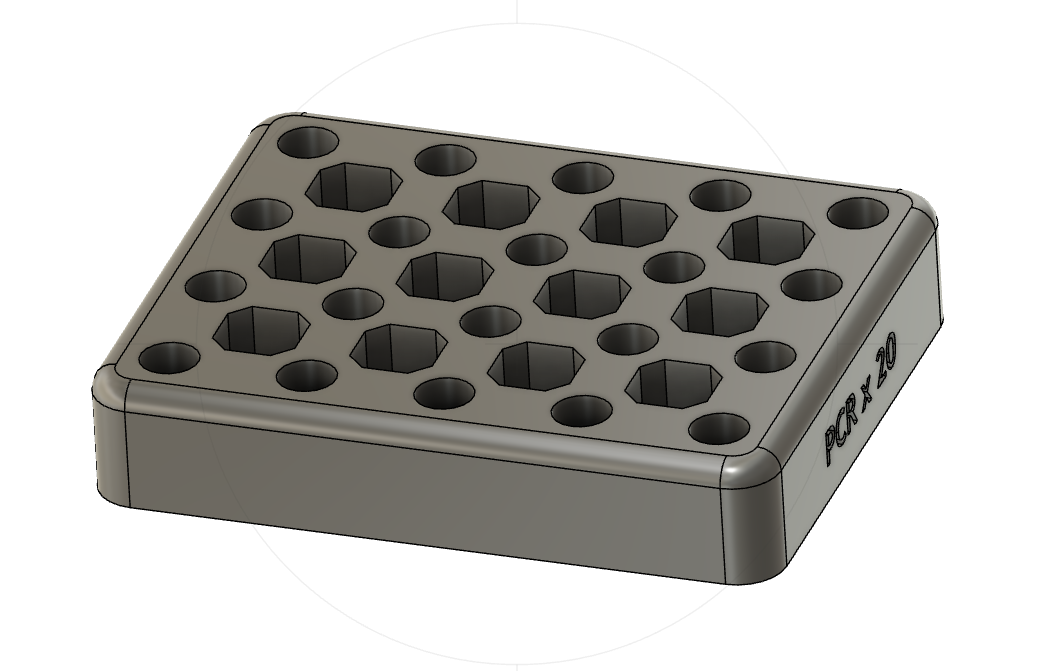
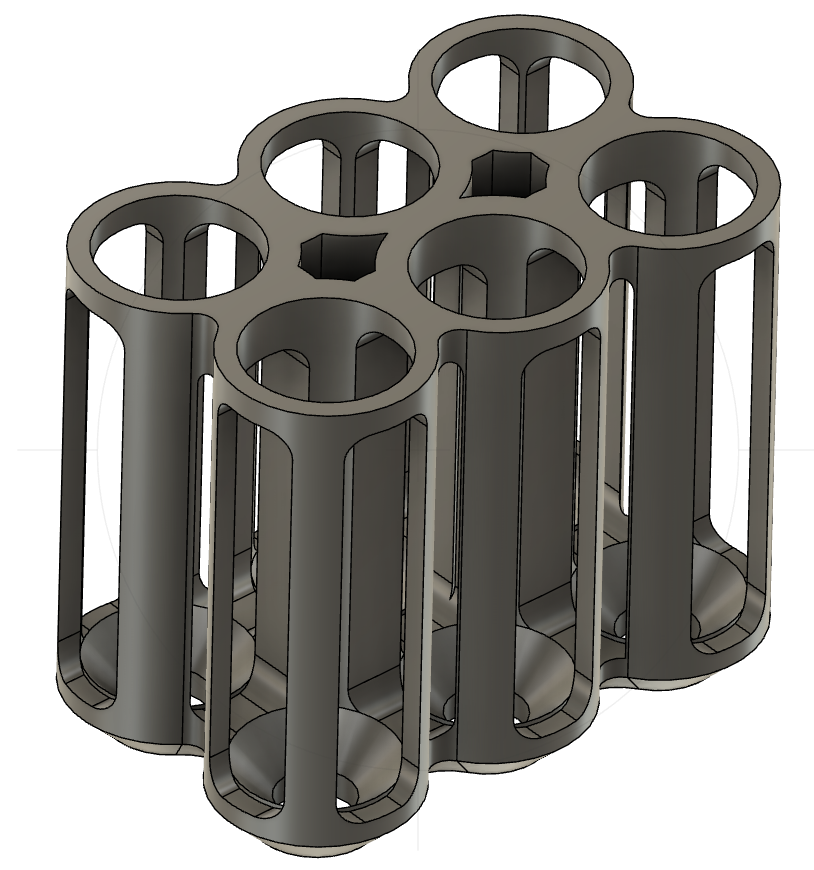
I often need to generate my own 3D models with CAD software to build the things I want to make. Most of what I’ve made over the years has been made using at least partially 3D printing. Therefore, I’ve taken a liking to generating my designs. I’ve been using fusion 360 which is geared exclusively towards engineering but I’m thinking on learning blender which allows for more organic methods of modelisation.

Climbing
Everyone needs to unwind from time to time, for me climbing is the perfect way to do so. It combines a full body workout with some problem solving, making it entertaining and new every time. I’ve been climbing indoors for couple years and would like to start doing outdoor climbing in the future!
Scientific output
Publications
https://orcid.org/0000-0002-4892-8161
2025
Provisional Title: Progenitor cell origin govern glutamatergic and GABAergic neuronal subtypes function in the hindbrain
Matthias Blanc and Cristina Pujades
… / …
2022
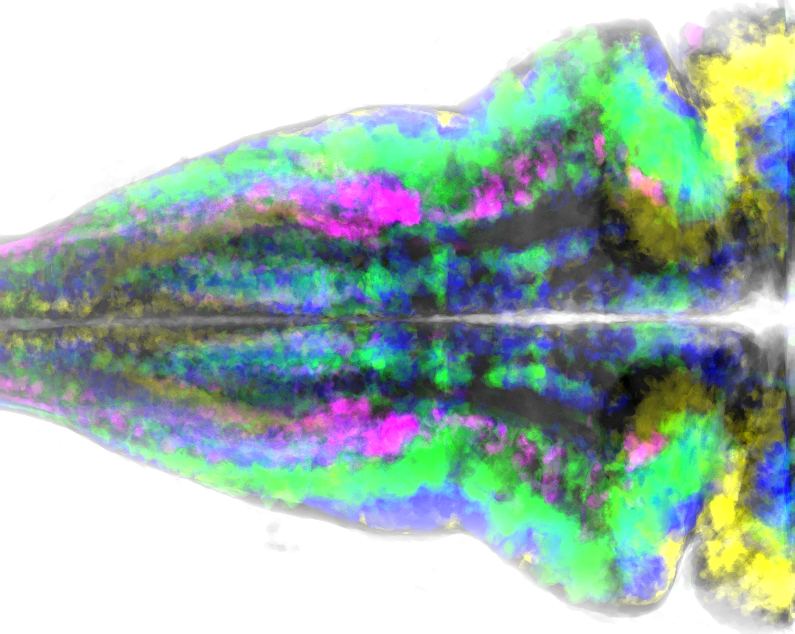
A dynamic and expandable digital 3D-atlas maker for monitoring the temporal changes in tissue growth during hindbrain morphogenesis
Matthias Blanc, Giovanni Dalmasso, Frederic Udina and Cristina Pujades
2018
Premyogenic progenitors derived from human pluripotent stem cells expand in floating culture and differentiate into transplantable myogenic progenitors
Fusako Sakai-Takemura, Asako Narita, Satoru Masuda, Toshifumi Wakamatsu, Nobuharu Watanabe, Takashi Nishiyama, Ken’ichiro Nogami, Matthias Blanc, Shin’ichi Takeda & Yuko Miyagoe-Suzuki
Scientific Reports / https://doi.org/10.1038/s41598-018-24959-y
2018
Making Skeletal Muscle from Human Pluripotent Stem Cells
Ken’ichiro Nogami, Matthias Blanc, Fusako Takemura, Shin’ichi Takeda and Yuko Miyagoe-Suzuki
Congress & Awards
2025
Barcelona, Spain – Catalan Cell and Tissue Research
9th CAT CAT meeting – Dynamics in Biology, from molecules to tissues
Oral presentation
2024
Barcelona, Spain – Universitat Pompeu Fabra
Open Access Research Award
Oral presentation
2024
Barcelona, Spain – Spanish society of developmental biology
SEBD Meeting 2024
Oral presentation
2022
Heidelberg, Germany – EMBO/EMBL
Plasticity across scales: from molecules to phenotypes
Poster
2022
El Escorial, Spain
RedDevNeural 3.0
Oral presentation
Digital resources
Image analysis codes
https://github.com/Matthias-Blanc
Python scripts in development

Align: 3D/4D rigid registration software, supervised/unsupervised training of neural network, automated rigid registration across samples or modalities.
PhenoSpike: 3D calcium activity analysis, signal extraction using segmented single cell masks, intersection with 3D atlas, feature extraction, clustering.
Fiji Macros
Batch processing for 3D atlas generation: Segmentation, Sample averaging, Intersection of 3D models and volume quantification.



 Matthias Blanc